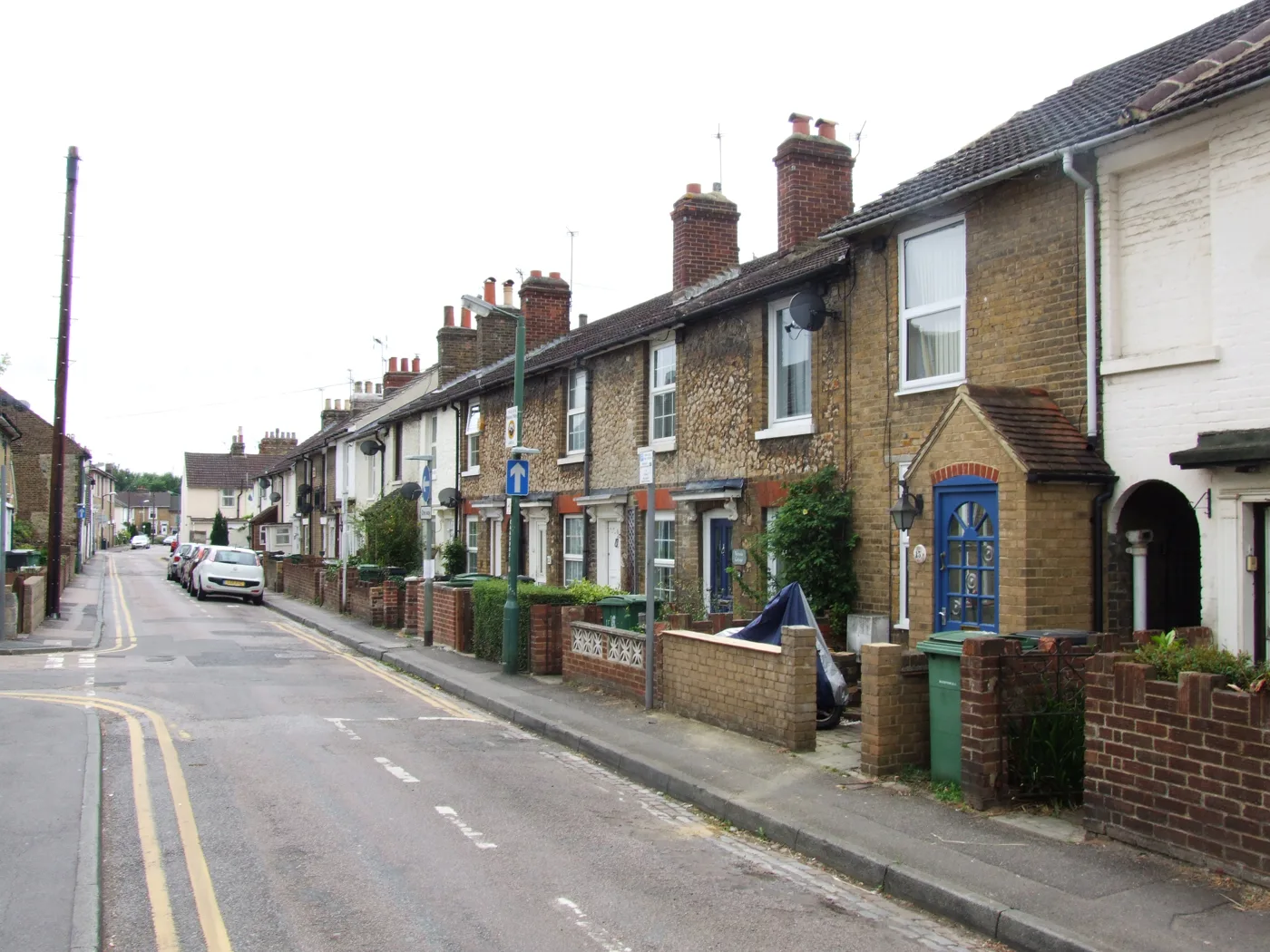
Maidstone will be a council landlord again from 1 October, 22 years after it handed its housing stock to what is now Golding Homes. It starts with 56 homes.
Maidstone Borough Council is about to become a council landlord again.
A report going to councillors on Tuesday asks for the Housing Revenue Account to be re-opened on 1 October 2026. The council closed its last one in 2004, when it transferred its housing stock to Maidstone Housing Trust, now Golding Homes.
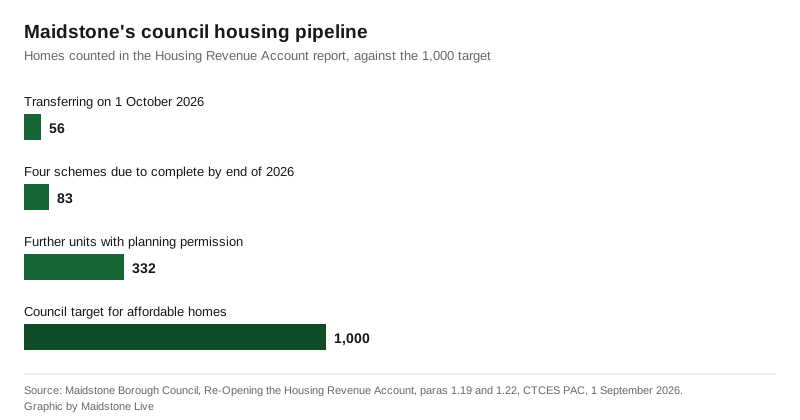
It starts small. Fifty-six homes move across on day one. The stated ambition is 1,000.
What is being decided, and when
The officer report is written by the Head of Finance, Adrian Lovegrove, for the Director of Finance and Resources, Mark Green. It travels through three meetings:
- Tuesday 1 September, Climate Transition, Corporate and Environmental Services Policy Advisory Committee, 6.30pm at the Town Hall
- Tuesday 15 September, Housing and Community Cohesion Policy Advisory Committee
- Wednesday 16 September, Cabinet, which takes the final decision
No permission is needed from the Secretary of State. The council will write to say it is doing it, and the report says officials at the housing ministry are “content with the approach taken”.
What a Housing Revenue Account actually is
It is the ring-fenced account a council must keep when it is a landlord in its own right. Rent comes in, repairs and management go out, and the two sides have to balance on their own.
The rules matter more than the accounting. The report sets out three of them:
- the account cannot be subsidised by the council’s general budget, and cannot subsidise it either
- it cannot go into deficit at any point
- it is governed by a 30-year financial plan, published here as the HRA Business Plan
Councils are legally required to open one once they hold more than 1,000 relevant properties. Maidstone is nowhere near that. The threshold was 200 when the council first looked at this in March 2025, and was then raised to 1,000. Officers recommend opening early anyway, so the systems are built before the stock arrives rather than after.
The 56 homes, and the 332 behind them
The opening stock is already let. It is 56 units of affordable rented and specialised supported housing that the council owns and manages through its general budget today.
What follows is the point of the exercise:
- 83 more units in four schemes due to complete by the end of this calendar year
- 332 further units that already have planning permission, including at Maidstone East and Springfield
- a target of 1,000 plus affordable homes
Two non-residential assets go into the account with them, because they are part of the same buildings: the ground floor commercial premises at Maidstone East, and Maidstone East Park.
The money
The account will take about £500,000 of income in its first full year, rising to about £5 million within five years. Councillors are asked to ringfence £500,000 of the council’s unallocated reserves as its opening cushion, roughly three months of average income over that period.
Homes transfer at “certified market value”, set by an independent surveyor and reduced to reflect that they earn social and affordable rents rather than market ones. The gap between what the homes cost to build and that lower value is, in effect, the subsidy. The council covers it from a Housing Investment Fund that currently stands at £15.5 million, and expects the opening tranche to cost it £273,000.
Borrowing is being kept in a separate pot from the rest of the council’s debt. The opening borrowing is internal and will be charged at the council’s current average cost of borrowing, 1.79%. Any new borrowing taken directly through the account from the Public Works Loan Board attracts a 40 basis point discount on the rate the council would otherwise pay, which is why the report says it is better to borrow through the HRA than around it.
What the rents look like
The business plan’s own assumptions for the first year of the plan:
| Tenure | Average weekly rent |
|---|---|
| Social Rent | £148.05 |
| Affordable Rent | £230.01 |
Both are modelled to rise each year. By the fifth year of the plan the assumptions are £180.92 and £292.47.
Existing tenants are not affected this year. The report asks for “the continuance of the existing arrangements”: same tenancy agreements, same rent, same service charges for the rest of the financial year.
The West Kent question
There is one line in the report that is easy to miss.
The recent government announcement about the proposed composition of unitary councils in Kent confirms that it is appropriate for Maidstone to proceed with re-opening its HRA, as no other authority in West Kent has an HRA.
Maidstone Borough Council will be abolished in April 2028 and folded into a new West Kent unitary. Officers are arguing that being the only council landlord in the area is a reason to start now, not a reason to wait: whatever housing service exists after 2028 will be built on this one.
The risk officers flag
Right to Buy. Tenants cannot use it in their first three years, but the report says a sale hurts far more when the stock is small, because each home sold is a bigger share of the whole.
Officers argue the risk has shrunk: government reforms have cut the maximum discounts and let councils keep more of the receipts to build replacements. It remains a statutory right, and the business plan has to assume some homes will go.
Who will keep an eye on it
The committee structure changes on the same day, 1 October. The Housing and Community Cohesion Policy Advisory Committee becomes a Housing Policy Advisory Committee dealing only with housing. Community cohesion moves to the Planning and Healthier Stronger Communities committee, which is renamed the Planning and Communities Policy Advisory Committee. Both changes are being made under delegated powers and do not need Cabinet approval, and the arrangement gets reviewed after six months.
Full Council keeps rent-setting, the annual budget and the business plan. Cabinet keeps the development programme and asset decisions.
What it means for you
If you rent one of the 56 homes. Nothing changes in your tenancy or your rent this financial year. The council says tenants have already been told. From 1 October there will be a dedicated page on the council’s website carrying the housing policies, including three that are being adopted alongside the account: a compensation policy, a recharge policy and a housing income and arrears policy. Ten more, covering damp and mould, repairs, building safety, empty homes and Right to Buy among others, are still being written.
If you are on the housing register. This does not create homes on its own. It is the account the homes are paid for and managed through. What it does change is who your landlord would be: council-owned social and affordable rent, rather than a housing association let.
If you want to say something. The deadline to speak at Tuesday’s committee has gone, but the report is heard again on 15 September and decided by Cabinet on 16 September. To make a statement you have to contact the council on 01622 602899 or committee@maidstone.gov.uk by 4pm one clear working day before the meeting, telling them which agenda item you want to speak on. Meeting papers are on the council’s committee site.
Related: Maidstone house prices and Maidstone council tax bands.
Have your say
We read every message. To comment on this story, email the newsdesk and we may publish a selection of responses: hello@maidstonelive.co.uk.