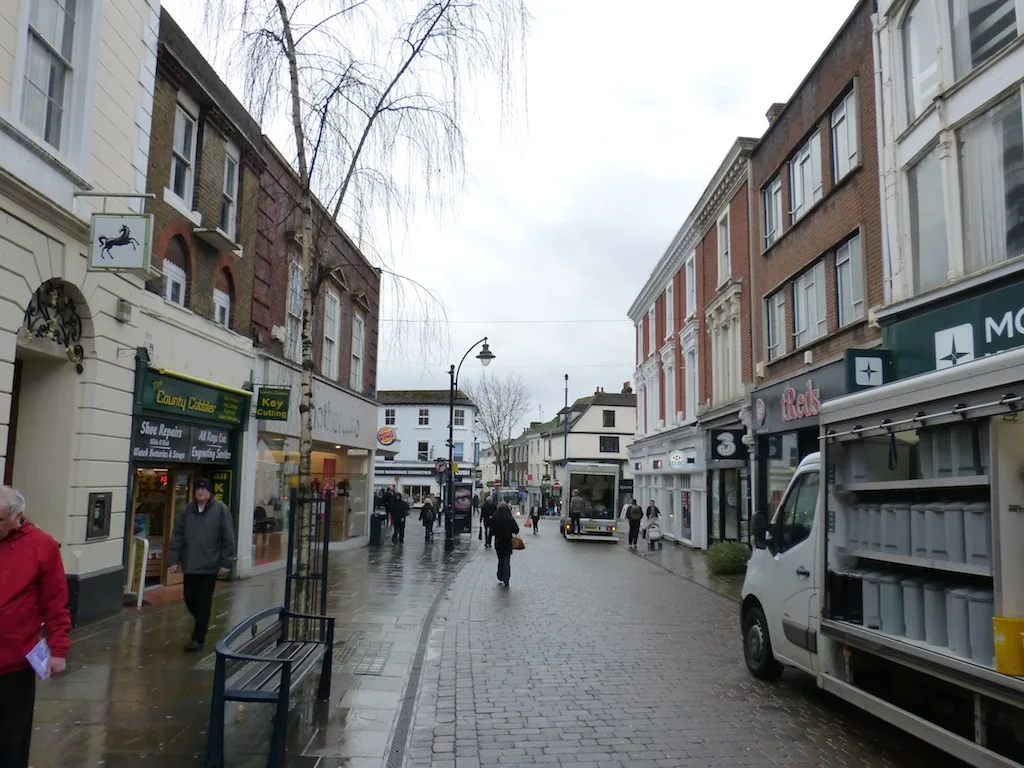
Maidstone Borough Council has secured over £19,000 to scrub gum off pavements for a second year running. The 86% figure it cites is shared with Cambridge.
Maidstone Borough Council has won more than £19,000 to clean chewing gum off the borough’s pavements, its second award in two years.
The money comes from the Chewing Gum Task Force, a scheme set up by Defra and paid for by gum manufacturers including Mars Wrigley and Perfetti Van Melle. It is administered by the charity Keep Britain Tidy. Maidstone is one of 50 UK councils funded this year (Maidstone Borough Council, 27 August 2026).
The grant pays for two things: removing gum staining from key public areas, and behaviour change work meant to stop it being dropped again. Councils in the scheme also get signage, posters and social media material (Keep Britain Tidy, Chewing Gum Task Force).
Where the 86% figure comes from
The council’s announcement is headlined “campaign cuts chewing gum litter by 86%”. The detail underneath is worth reading, because it is more careful than the headline.
Maidstone was one of just two councils, with Cambridge, chosen for a full independent evaluation of street cleansing and prevention signage. The Task Force’s own annual report describes the result this way:
As a result of the interventions we measured up to 86% reduction in gum littering after two months.
Three things follow from the wording:
- it is up to 86%, not a flat 86%
- it covers both evaluated councils, Cambridge and Maidstone, not Maidstone alone
- it is measured after two months, with reductions still evident six months on
Keep Britain Tidy uses the same “up to 86%” phrasing for the programme as a whole, across all funded areas (Chewing Gum Task Force Year Four report).
The council’s own body text says the same thing, that gum litter “fell by up to 86% after two months”. It is the headline that rounds it off.
None of that makes the result a bad one. It makes it a shared one.
What the evaluation actually found
The Year Four evaluation went further than counting gum. It also measured general littering and surveyed the public, local businesses and council staff. Its findings:
- the programme returned an estimated £2.30 to £5.20 for every £1 invested, counting reduced cleaning costs and the economic benefit of a cleaner high street
- people said they were more likely to spend time and money in the cleaned areas, and businesses reported more value in their local high streets
- across four years of evaluations, the interventions work best when focused on one area with a high density of signage, rather than spread thin
That last point is the practical one. It is the difference between a campaign that shifts behaviour and one that just cleans a pavement.
Maidstone’s own account of taking part, quoted in the report, is about the process rather than the result:
Maidstone Borough Council were successfully chosen for the extended evaluation and monitoring. From the beginning, Behaviour Change made this a really easy process.
The scheme in numbers
| Measure | Figure |
|---|---|
| Grants awarded to councils | £6.46 million |
| Pavement cleaned | More than 4.15 million square metres |
| Manufacturers' commitment | Up to £10 million over five years, 2022 to 2026 |
| Councils funded this year | 50 across the UK |
| Maidstone's award | Over £19,000, a second consecutive year |
The £6.46 million awarded so far sits against a commitment of up to £10 million over the five years to 2026, so this is the closing stretch of the scheme as currently funded.
What it means for you
Councillor Clive English, cabinet member for environmental services and enforcement, put the ask simply: “By putting chewing gum in a bin after use, everyone can play a part in helping to keep Maidstone clean.”
The practical points for residents:
- the work covers key public areas across the borough, including streets and parks, not one named street
- the council has not published a list of the locations or a start date
- gum staining is removed by deep cleaning, so expect cleaning crews rather than roadworks
- the signage is part of the funded work, so new gum bin prompts on lampposts and bins are the visible sign it has begun
Street cleaning in the borough is Maidstone Borough Council’s job, not Kent County Council’s, so a gum-stained pavement is reported to the borough (Maidstone Borough Council, street care and cleaning).
The release does not name the areas being targeted or give a start date, and the council has published nothing further. We will update this article if it does.
Sources
- Maidstone Borough Council: Maidstone’s gum-busters return after campaign cuts chewing gum litter by 86%, published 27 August 2026. The grant, the 50 councils, the Defra and manufacturer funding, and the quote from Councillor Clive English.
- Keep Britain Tidy: Chewing Gum Task Force. The £6.46 million awarded, 4.15 million square metres cleaned, the “up to 86%” programme figure, and the up to £10 million five-year commitment.
- Chewing Gum Task Force Annual Report Year Four, Keep Britain Tidy. Names Cambridge and Maidstone as the two independently evaluated councils, gives the “up to 86% after two months” measurement, the £2.30 to £5.20 return on investment, the signage density finding, and the council’s own quote.
Have your say
We read every message. To comment on this story, email the newsdesk and we may publish a selection of responses: hello@maidstonelive.co.uk.