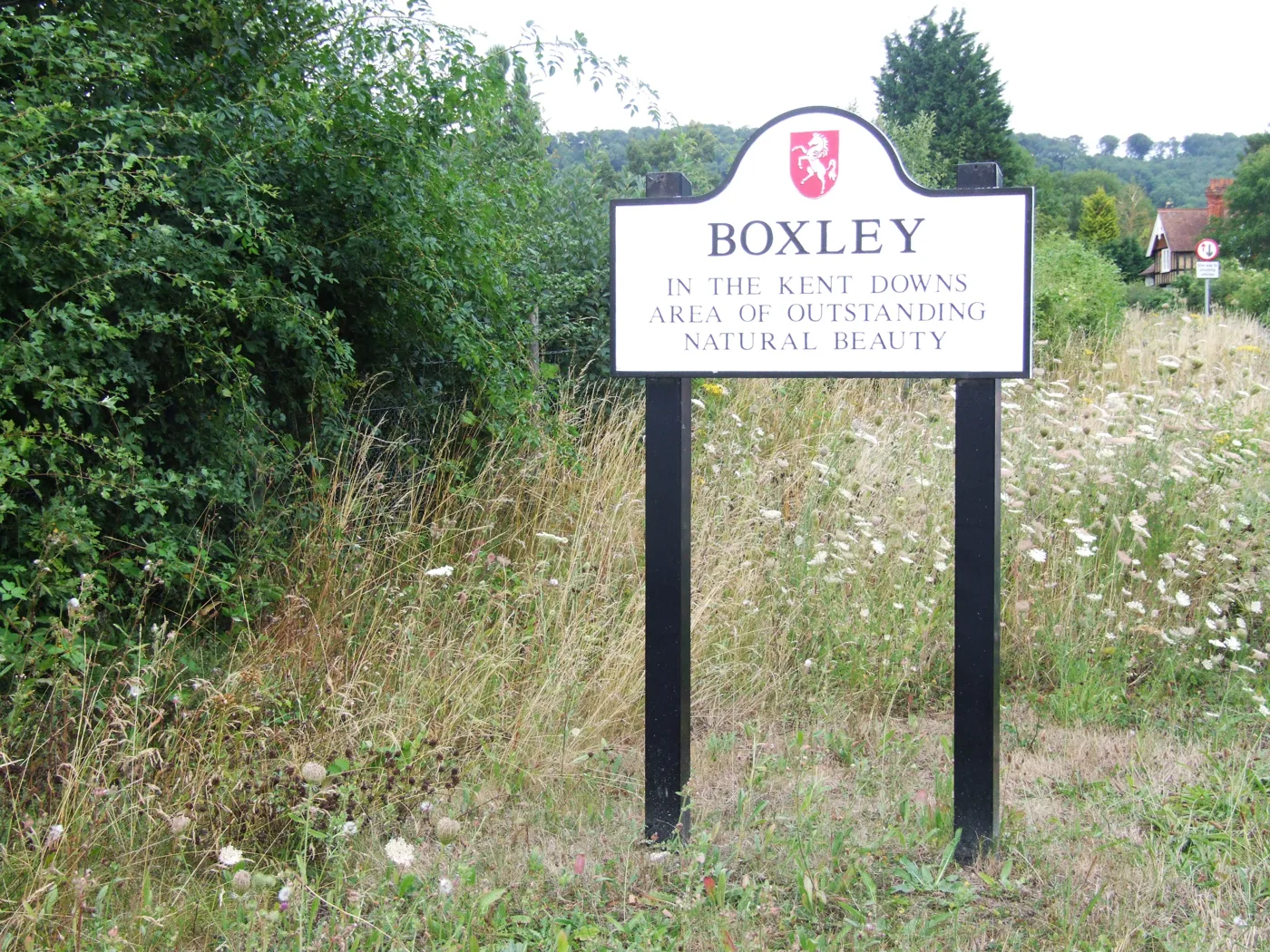
The council's own table puts Boxley Downs top on 108 litter reports in a year, ahead of High Street. A £100,000 rural litter team is not being recommended.
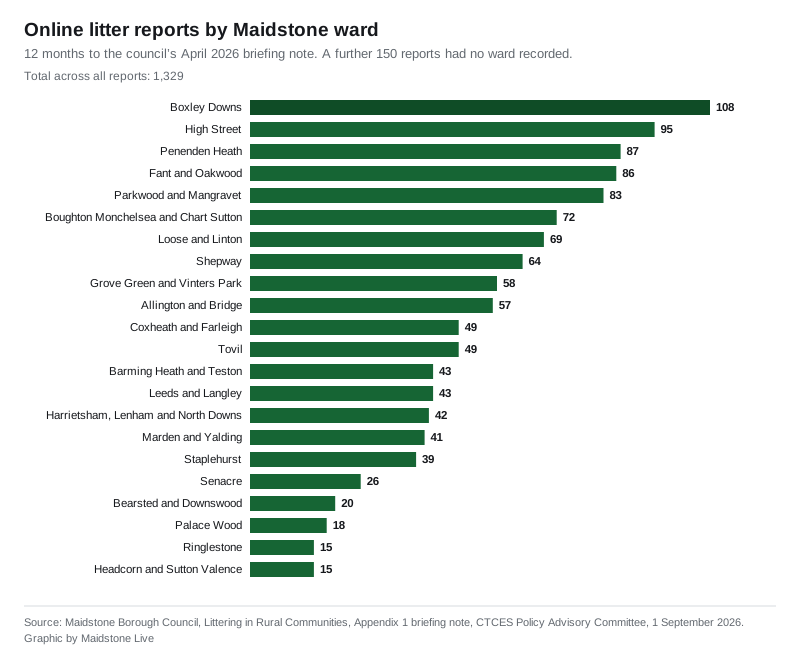
Residents in Maidstone borough made 1,329 online litter reports over 12 months. The ward that produced the most of them was Boxley Downs, with 108.
Boxley Downs is a ward on the North Downs above the town, and the council’s own fly-tipping hotspot list puts two rural lanes inside it. Its 108 reports are in the council’s own papers for a committee meeting on Tuesday, and they sit awkwardly with the argument the meeting is there to settle.
Where this came from
In April, Cllr Trzebinski put a motion to full council, seconded by Cllr Russell, saying rural communities should get the same level of service as the town centre and that many rural roads carry “an unacceptable excess of litter”. It asked for six things, including a published annual schedule of rural litter picks and more mobile CCTV in fly-tipping hotspots.
The mayor referred it to the Climate Transition, Corporate and Environmental Services Policy Advisory Committee. Officers have now reported back. The committee meets at 6.30pm on Tuesday 1 September at the Town Hall, and Cabinet takes the decision on 16 September.
The ward table
The heat map in the briefing note counts online litter reports over the 12 months to the note’s publication for the council meeting of 29 April 2026. These are the wards at each end.
| Most reports | Fewest reports | ||
|---|---|---|---|
| Boxley Downs | 108 | Headcorn and Sutton Valence | 15 |
| High Street | 95 | Ringlestone | 15 |
| Penenden Heath | 87 | Palace Wood | 18 |
| Fant and Oakwood | 86 | Bearsted and Downswood | 20 |
| Parkwood and Mangravet | 83 | Senacre | 26 |
A further 150 reports carried no ward details. The 22 named wards and that unknown group add up to the 1,329 total.
The paragraph that leaves one ward out
The officer report summarises that table like this: “High Street, Penenden Heath, Fant and Oakwood and Parkwood and Mangravet all appear at the top of the list with over 80 online litter reports per area in the past 12 months.”
All four of those are urban Maidstone. None of them is the highest. Boxley Downs, on 108, is above all four and is not mentioned in the summary at all.
It is not a fringe ward for this subject either. Of the eight fly-tipping hotspots the council names in the same document, two are in Boxley Downs: Castle Hill, where six investigations brought in £750 with £250 outstanding, and Yelsted Lane, where £8,300 has been receipted and a major investigation was passed to the Environment Agency after the council seized a lorry.
The report’s other claim about the table does check out. Headcorn and Sutton Valence, Staplehurst, Marden and Yalding, and Harrietsham, Lenham and North Downs are all in the lowest eight.
Why rural roads get a slower service
The gap is written into national rules, not set locally. DEFRA’s Code of Practice on Litter and Refuse sorts land by how intensively it is used, and sets a maximum response time for each. Rural roads sit in the low intensity band.
| Zone | Example | Maximum response time |
|---|---|---|
| High | Primary and secondary retail | Half a day |
| Medium | Housing developments, schools in term time | 1 day |
| Low | Rural roads, industrial areas | 14 days |
| Special circumstances | Central reservations, verges | 28 days, or as soon as reasonably practicable |
Then there is the traffic. Any road with a limit above 40mph needs additional control measures before anyone can pick litter on it: sightline checks, signage, sometimes temporary traffic management. The council works with Kent Highways to use planned road closures for cleansing, but many closures are emergency utility works applied for retrospectively, so no notice arrives.
The council’s insurance does not cover volunteer litter pickers working on roads with a speed limit of 40mph or more. If you have been doing an ad hoc pick on a fast rural road, that is the sentence to read twice.
What officers are recommending
Three things, all of which they say fit inside the existing budget:
- a volunteer campaign, with an online presence and clearer information for people who want to join a group
- an anti-littering campaign aimed at rural roads, built around community pride rather than enforcement
- Rural Community Days, trialled with parish councils and volunteer groups, where the council provides traffic management and volunteers do the picking
What officers are ruling out
- A published annual schedule of litter picks. Not recommended. Maidstone works to an inspection-based regime, and officers argue a printed schedule would set expectations it could not meet once weather, fly-tipping peaks and road closures moved things around.
- More mobile CCTV. The waste crime team already runs 47 cameras, mostly rural and mostly in the south of the borough. Officers say more cameras would not produce much more enforcement, because the limit is staff to operate them and sites that suit a camera. They also have to rotate the cameras so they are not spotted and stolen.
- A dedicated rural litter picking team. Two operatives and a vehicle would cost around £100,000 a year. Officers say the committee could ask Cabinet to weigh it in the annual budget round, but have left it out of the recommendations because of the cost.
The enforcement numbers
Across the borough the waste crime team has run 305 fly-tipping investigations, recovering £33,972 in paid fixed penalties with a further £10,600 outstanding. Two of the named hotspots, Burberry Lane at Leeds and Langley and Forge Lane at Boughton Monchelsea and Chart Sutton, each have a live prosecution case for multiple fly tips.
In the town, the focus is communal bin stores at blocks of flats. Working with Golding Homes, the team has run 29 investigations in the town centre and surrounding residential areas, issuing 12 fixed penalties totalling £3,000, with 17 still under investigation.
One hotspot has gone quiet. Small Profits at Marden and Yalding produced 14 investigations in 2025 and £3,200 in receipts. The report records no further reports there in 2026.
A number that does not match
The two documents disagree about how many volunteer groups the council supports. The officer report says 23. The briefing note attached to it, written for the April council meeting, says 46. Neither explains the difference, and we have not been able to reconcile them from the papers.
Whichever it is, the council is holding a thank you event for volunteers at the Town Hall in October.
What it means for you
Reporting is what puts a road on the map. The table above is a count of reports, not a survey of how dirty each ward is. A rural lane nobody reports stays out of the data, and out of the case for spending money on it. The council has separate forms to report litter and to report fly-tipping. Councillors specifically praised the enforcement team’s response to fly-tipping reported through the online tool when they debated the motion.
Know the standard before you chase. On a rural road the council’s maximum response time is 14 days, not the same day. On a verge or central reservation it is 28 days.
Do not pick on a fast road. If the limit is 40mph or above, you are not insured by the council and the guidance it quotes says the work should not go ahead if the risk cannot be controlled. Joining an existing group gets you equipment, waste clearance and cover, and the council lends litter picking tools and green bags with seven days’ notice.
If you want the £100,000 team. It is not in the recommendations, so the only route is the budget process. The committee can ask Cabinet to consider it there. To make a statement at a meeting, contact the council on 01622 602899 or committee@maidstone.gov.uk by 4pm one clear working day beforehand.
Related: Maidstone bin collection days.
Have your say
We read every message. To comment on this story, email the newsdesk and we may publish a selection of responses: hello@maidstonelive.co.uk.