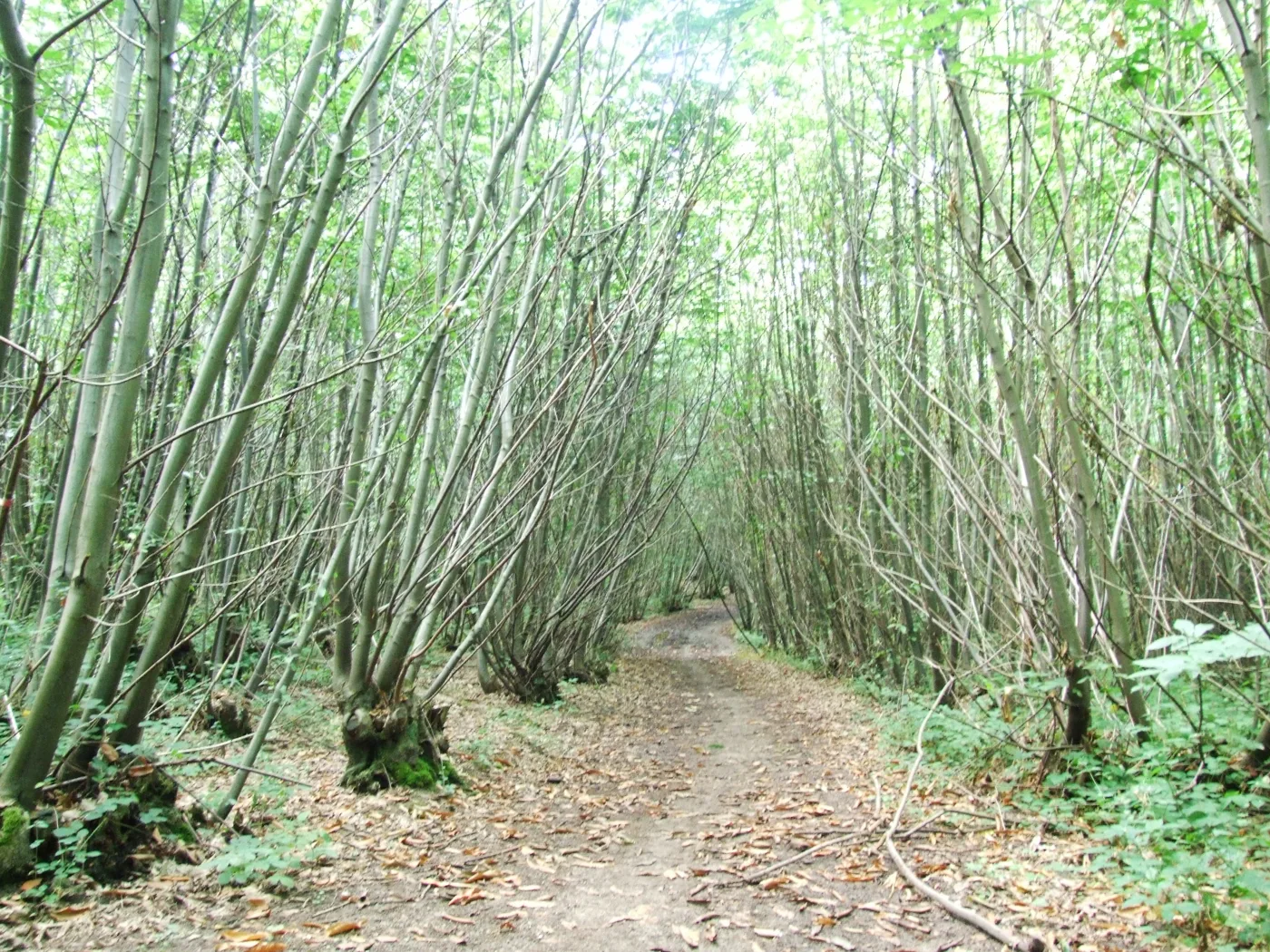

Kent's draft minerals plan would allow quarrying on up to 49 hectares beside Hermitage Quarry, costing 41 hectares of ancient woodland. Comments now close 5 October.
Anyone who wants to comment on the plan to quarry Oaken Wood now has three weeks longer than Maidstone Borough Council’s own website says.
Kent County Council extended its consultation on 21 August. Comments on the Pre-Submission Draft Kent Mineral Sites Plan now close at 11.59pm on Monday 5 October 2026. The borough council’s news release of 6 August still gives the original date of 11 September, and had not been updated when we checked on 26 August.
What the plan actually proposes
The draft plan allocates one new hard rock site in the whole of Kent. It is land south and west of Hermitage Quarry, off Hermitage Lane, and the plan document sets out the scale:
- the allocation covers about 96 hectares, of which up to 49 hectares could be worked
- the estimated reserve is about 23 million tonnes of Kentish Ragstone
- the northern part of the site is in Tonbridge and Malling; the southern part is in Maidstone borough, in Barming parish
- restoration would use roughly 500,000 tonnes a year of inert fill, returning the land to native woodland and meadow
- the promoter is Gallagher Aggregates Ltd, which already operates Hermitage Quarry
Kent County Council says it needs the site because the county requires around 19.9 million tonnes of hard rock up to 2039, and its existing stone reserves are expected to run out by about 2033.
The woodland figure, from the county council’s own assessment
Most of the site sits inside Oaken Wood, which is designated as a Local Wildlife Site and, in large part, as a plantation on an ancient woodland site. Planning policy treats that as ancient woodland, an irreplaceable habitat.
The number is in the county council’s own commissioned evidence. The Hermitage Quarry Suitability for Allocation Assessment Report, dated June 2026, states that 42 hectares of woodland would be lost to mineral working, of which 41 hectares is ancient woodland.
Against that, the assessment records the promoter’s proposed compensation:
- 49 hectares of new woodland created inside the extraction area
- 48 hectares of habitat creation or management on the operator’s own land
- at least 57 hectares of woodland management outside that landholding
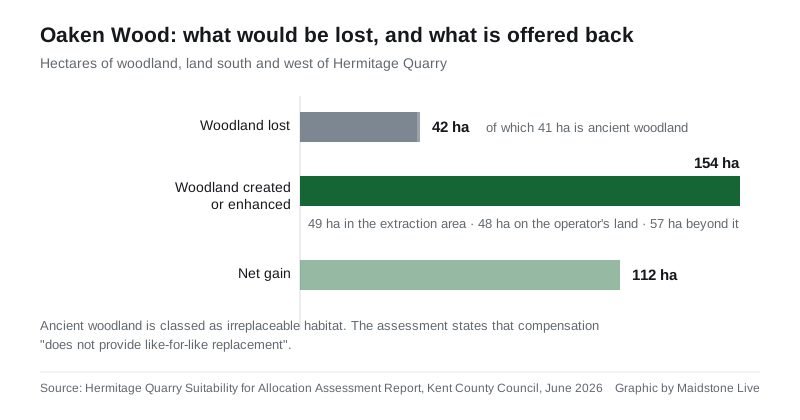
That totals 154 hectares of woodland creation and enhancement, a net gain the assessment puts at 112 hectares once the loss is deducted. The report calls it a 266% increase in native mixed woodland.
The same report is blunt about what compensation cannot do. It says any strategy “must acknowledge that ancient woodland (PAWS) and any veteran or ancient trees is irreplaceable habitat and so compensation does not provide like-for-like replacement”. It also concludes that the presence of ancient woodland makes the site “incompatible with planning policy unless there are wholly exceptional reasons as to why the development should go ahead and a suitable compensation strategy exists”.
Officers judged that both of those tests could be met at plan-making stage. The assessment adds that surveys in 2023 found no ancient or veteran trees inside the proposed allocation, and that this would need confirming.
Where the borough council stands
Maidstone Borough Council objected to the extension in July 2024 and has not shifted. Councillor Tony Harwood, Cabinet Member for Planning Policy and Management, said in the council’s August release: “If confirmed, the planned quarry extension would result in the single greatest loss of irreplaceable ancient woodland in the British Isles for a generation.”
The council will submit its own response before the deadline. That is separate from anything residents send in, and does not count in place of it.
What it means for you
This is a Regulation 19 consultation, which is narrower than most council consultations. Comments go to the Secretary of State and are considered by an independent planning inspector, not decided by Kent County Council.
That changes what is worth writing. The consultation asks specifically whether the plan is legally compliant and sound, meaning positively prepared, justified, effective and consistent with national policy. A comment saying only that you dislike the proposal carries less weight at this stage than one that engages with those tests. Kent County Council publishes a guidance note on making a representation, and recommends reading it first.
To respond:
- Deadline: 11.59pm, Monday 5 October 2026
- Online: the representations form on Let’s Talk Kent
- By email: mwlp@kent.gov.uk
- By post: Minerals and Waste Planning Policy Team, Planning Applications Group, Sessions House, Maidstone, ME14 1XQ
- In person: hard copies are at Sessions House, County Hall, Maidstone ME14 1XQ, 9am to 5pm on weekdays
One thing worth being clear about. Including the site in the plan would not grant planning permission. Gallagher Aggregates would still need to make a separate planning application, with its own environmental assessments, its own public consultation and its own decision. The allocation settles whether the principle of quarrying there is acceptable, which is why this stage matters.
If you want to follow what is being applied for locally in the meantime, we track the borough’s register on our Maidstone planning applications page.
Have your say