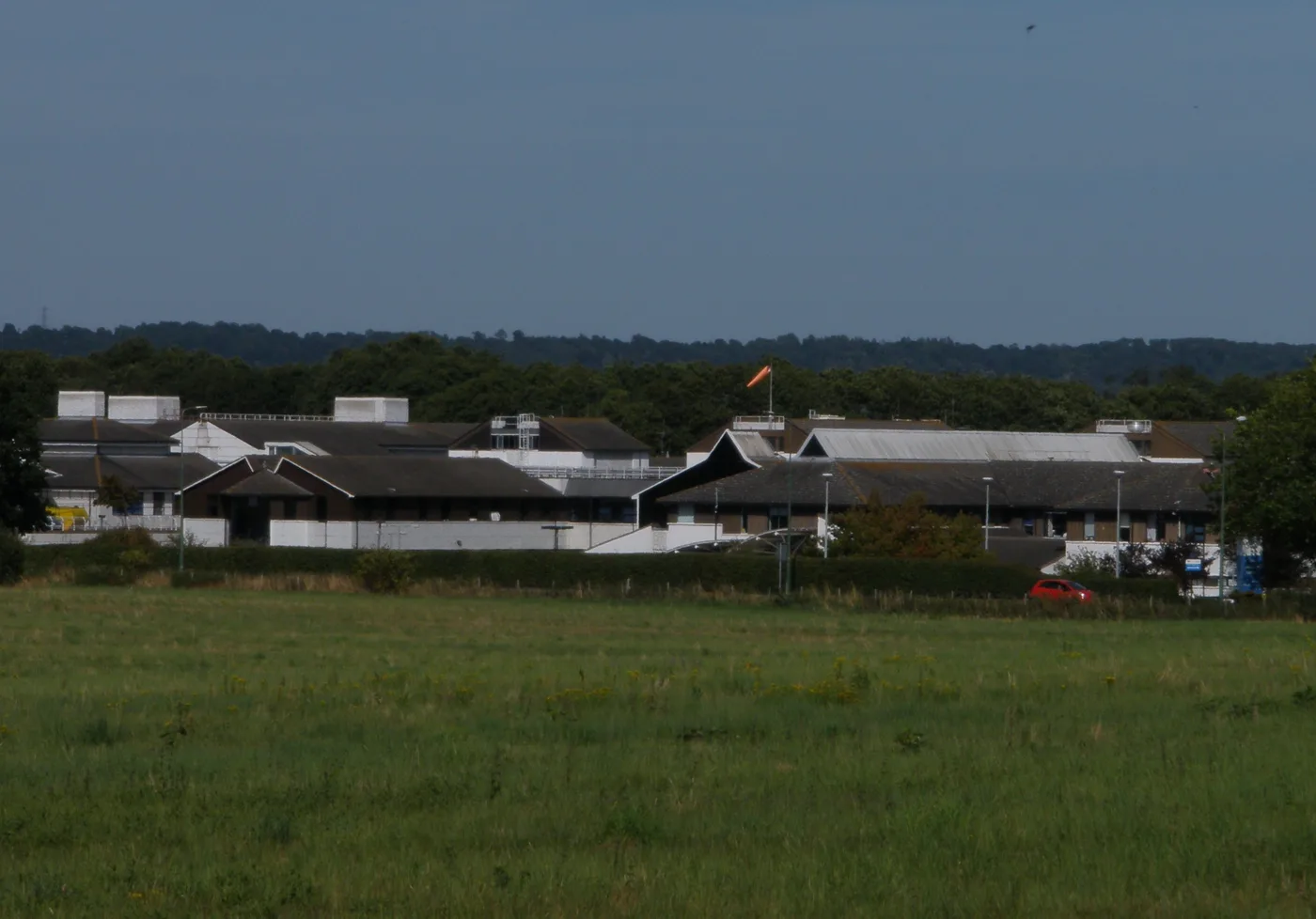
MTW's first surgical robot arrived at Maidstone Hospital in September 2024. Surgeons have now passed 1,000 robot-assisted operations across both hospitals.
Surgeons at Maidstone and Tunbridge Wells NHS Trust have now performed more than 1,000 robot-assisted operations, a little under two years after the first machine arrived at Maidstone Hospital.
The trust announced the milestone on 28 August. The 1,000 figure covers both of its hospitals, not Maidstone alone.
How it works
In robot-assisted surgery the surgeon sits at a console connected to a robot, which copies their hand movements. The trust says the point is precision rather than automation: the operation is still being carried out by the surgeon.
The practical claim is that complex procedures can be done through smaller incisions, which reduces damage to surrounding tissue.
The timeline
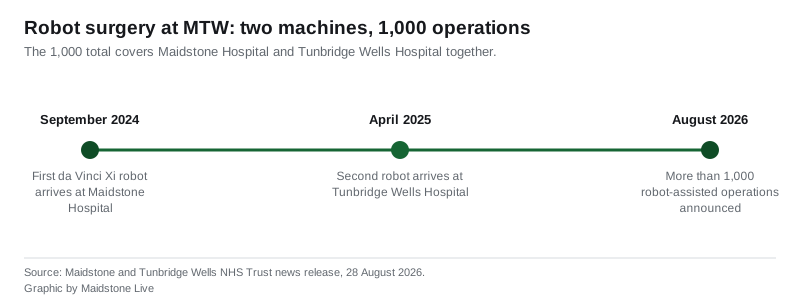
September 2024. The trust takes delivery of its first da Vinci Xi robot, at Maidstone Hospital. It says the surgical team reached full theatre schedules for gynaecological cancer, general surgery and urology faster than any other hospital in the UK and Ireland has managed over the past seven years. That is the trust’s own comparison.
April 2025. A second robot arrives at Tunbridge Wells Hospital, about 15 miles south west of Maidstone, and is used for general surgery, colorectal, bariatric and gynaecology work.
August 2026. The 1,000th operation is passed.
What the surgeons say
Daniel Lawes, consultant colorectal surgeon and chief of service for the surgery division, set out what the technology changes in theatre.
“The 3D view and super magnification give us better visualisation and more precision, meaning safer surgery and improved outcomes for patients,” he said.
“The system shows us where tiny nerves and vessels are located, so we can suture with greater accuracy and there is less risk of post-operative bleeding.”
He also made a training argument: having the machines locally lets the trust develop its own surgeons rather than sending them elsewhere.
The wider surgical picture at the trust
The robot programme sits alongside a bariatric service that reached its own milestone earlier in August, having treated more than 500 patients since launching at Tunbridge Wells Hospital in November 2022. Four of its consultants are trained in robot-assisted surgery.
That service takes referrals from Kent, Medway and parts of Sussex, and only after a patient has completed a Tier 3 weight management programme. Follow-up runs for two years after surgery.
What it means for you
If you are referred for gynaecological cancer surgery, urology, general surgery or colorectal work at MTW, a robot-assisted operation is now a realistic route, and it is available in west Kent rather than at a specialist centre in London.
Two honest caveats. The trust has not published waiting time figures alongside this announcement, so the milestone says nothing directly about how long you would wait. And the clinical benefits quoted above are the trust’s own account, not an independent evaluation.
Which approach is right for any individual operation is a decision for the surgical team, and not every procedure is suitable for a robot. If you have an operation coming up at Maidstone Hospital, the team looking after you can tell you whether it applies to yours.
Have your say
We read every message. To comment on this story, email the newsdesk and we may publish a selection of responses: hello@maidstonelive.co.uk.