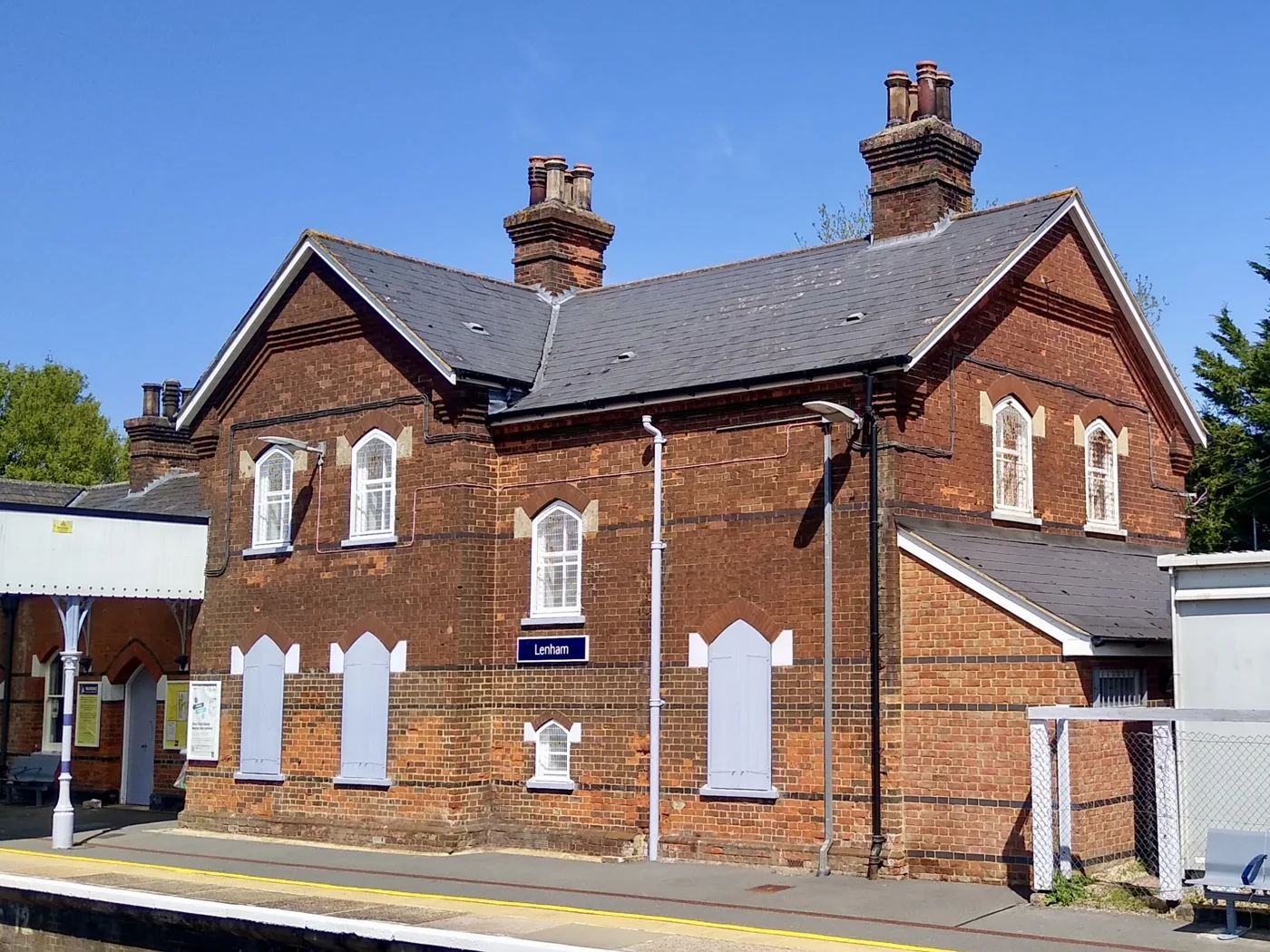
Maidstone's scoping opinion of 28 August orders the Heathlands team to model what happens if the promised new railway station is delayed or never built.
Maidstone Borough Council has told the promoters of Heathlands, the 5,000-home settlement planned at Lenham Heath, that they must set out what happens if the new railway station at the heart of the scheme is delayed or never built.
The instruction is in the council’s EIA scoping opinion, reference 26/502146/EIASCO, issued on Friday 28 August 2026 and decided at planning committee on 20 August. A scoping opinion is the formal step before a planning application: it fixes what the developer’s environmental statement has to assess.
No application has been submitted yet.
The station demand
The station is not treated as a nice-to-have. The scoping opinion calls it “an inherent part of the proposed development”, then tells the applicant to plan for it not arriving on time.
The environmental statement must:
- consider the implications if the station is delayed, or if a no-station scenario occurs
- build that into either the alternatives assessment or the reasonable worst case for every relevant topic
- identify the consents and approvals the station needs
- name the parties responsible for funding, construction and operation
- record the status of engagement and any agreement with Network Rail and Southeastern
- set out the planning conditions, obligations or phasing controls that would actually secure it
The air quality chapter gets the same treatment. Where the station and the shift to rail travel are counted as part of the development, the assessment has to run station-delivered, delayed-delivery and no-station cases.
Why that matters locally
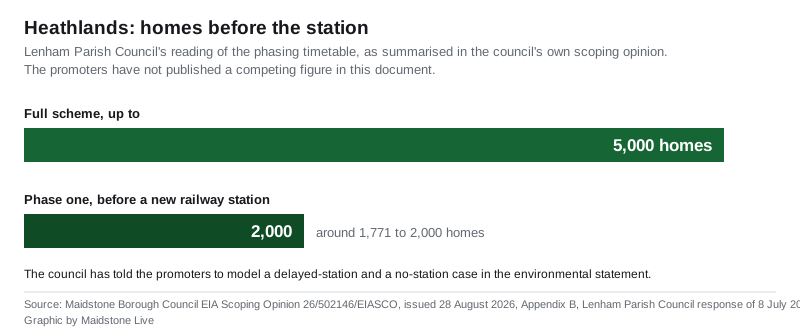
Lenham Parish Council, responding on 8 July, questioned the phasing timetable directly. Its objection, as summarised in the council’s own scoping opinion, is that phase one would allow around 1,771 to 2,000 homes to be built without a new railway station.
The parish council also asked for firm written commitments from Network Rail and South East Water, and evidence of funding and delivery for the station, wastewater treatment and schools, rather than assumptions.
What Heathlands is
The site covers 330 hectares between the villages of Lenham and Charing, about nine miles east of Maidstone town centre. It is allocated in the adopted Maidstone Borough Local Plan Review and has its own supplementary planning document, the Heathlands Garden Settlement SPD 2026.
What the applicant, WSP UK Limited, describes is an outline application for:
- up to 5,000 homes
- employment, mixed use and community floorspace
- public open space, outdoor sports provision and structural planting
- schools
- a new railway station
- demolition of existing buildings and associated infrastructure
The London to Ashford International railway line cuts across the site, dividing its northern and southern halves, with the M20 and High Speed 1 further south. The Great Stour runs north to south through the western side. Lenham Quarry, immediately south of the railway, has been fully excavated and is being restored, and Chapel Farm in the south west is an allocated future quarry due to be worked from 2027.
The site contains three ancient woodlands, Roughet Shaw, Wheatgratten Wood and Round Wood, with more ancient woodland around it. Two local wildlife sites lie within the boundary: MA66 Lenham Heath and Chilston Park, and MA55 Pasture and Ponds, Lenham Forstal. The Kent Downs National Landscape lies to the north and east.
The council is also a promoter
One of the two representations received raised the obvious problem: Maidstone Borough Council is a co-promoter of the site as well as the planning authority deciding it.
The council’s answer, printed in the opinion, is that officers are “mindful of this matter”. That is why the scoping opinion was taken to planning committee rather than settled by an officer, and why the council commissioned independent advice from consultancy Ramboll to review the developer’s scoping report.
What has to be assessed
Fifteen topics are scoped into the environmental statement:
- Traffic and transport
- Air quality
- Noise and vibration
- Water environment and flood risk
- Biodiversity, ecology and nature conservation
- Aquatic ecology
- Archaeology
- Cultural heritage
- Climate change
- Ground conditions
- Geomorphology
- Soils
- Landscape and visual impact
- Human health
- Socio-economics, tourism and recreation
Several consultees added conditions of their own:
- National Highways wants the transport assessment to cover the M20 using the Kent Transport Model, and expects the approach to line up with the other big Kent allocations at Lidsing and Otterpool.
- KCC minerals and waste says the allocated Chapel Farm sand deposit must be worked out, or phased, before it is built over, and that other Folkestone Formation ground on the site needs testing against mineral safeguarding policy. Folkestone Formation soft sand is described as a strategic, non-substitutable resource.
- Active Travel England asked for a vision-led transport approach and named a required walking and cycling route along the A20, plus improvements to public footpaths KH400, KH399, KH399A, KH398, KH397 and KH214.
- CPRE argued the 20% biodiversity net gain target should shape layout, phasing and buffers from the start rather than being calculated at the end. Council officers recommend the applicant acknowledges that point.
- KCC as flood authority wants a phasing strategy where each phase handles its own surface water where practicable.
- Save Our Heath Lands asked for standalone assessments of lighting and dark skies, human health, minerals, waste, major accidents, water supply and wastewater, landscape effects on the Kent Downs, and long-term stewardship.
What it means for you
Nothing is decided, and nothing is consented. A scoping opinion only fixes the homework.
- There is no formal public consultation on a scoping opinion, and the council was not required to invite comments. Two were sent in anyway and are printed in the document.
- The planning application itself will be consulted on, and that is the stage at which objections carry weight.
- The opinion, its appendices and every consultee response are on the Mid Kent planning register under reference 26/502146/EIASCO.
Our Maidstone planning applications page explains how to search the register and register for alerts, so the outline application does not slip past you.
Have your say
We read every message. To comment on this story, email the newsdesk and we may publish a selection of responses: hello@maidstonelive.co.uk.